export, Seafood/Seafood Processed products
King crab

Product features
[English]
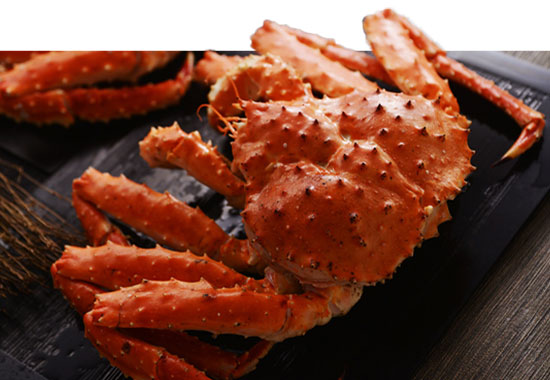
The king crab, also known as the King of Crabs, is a member of the hermit crab in its biological classification. Crabs usually have eight legs, but king crabs have six, and two small legs are in the abdomen (gill chamber).
King crab has a large catch in the sea around Hokkaido and is a special product of Hokkaido. In addition, the season of king crab varies depending on the region, but in Hokkaido it is said to be from autumn to winter (September to January).
There are many ways to eat king crab, but if you want to eat it as it is, you should boil it in salt or steam it before eating it. Fresh food can be eaten raw. Eggs are eaten in soy sauce or salt. Recipes using king crab include hot pot, gratin, vinegared food, fried rice, etc., regardless of Japanese, Western, or Chinese.
[French]
Le crabe royal, également appelé le roi des crabes, fait partie de la famille biologique des bernard-l'ermite. Alors que les crabes ont généralement huit pattes, les crabes royaux en ont six, avec deux pattes plus petites dans leur abdomen (cavité branchiale).
Les crabes royaux sont pêchés dans les mers entourant Hokkaido et sont une spécialité de l'île. La saison du crabe royal varie d'une région à l'autre, mais à Hokkaido, elle s'étend de l'automne à l'hiver (septembre à janvier).
Le crabe royal peut être consommé de diverses manières, mais s'il est consommé tel quel, il est préférable de le faire bouillir dans de l'eau salée ou de le cuire à la vapeur avant de le manger. Si le crabe est frais, il peut être mangé cru. Les œufs sont consommés marinés dans de la sauce de soja ou du sel. Le crabe royal peut être à la base de nombreux plats tels que les nabé, les gratins, les plats vinaigrés et le riz frit, et peut être utilisé tant dans les plats japonais, chinois, qu'occidentaux.
The king crab, also known as the King of Crabs, is a member of the hermit crab in its biological classification. Crabs usually have eight legs, but king crabs have six, and two small legs are in the abdomen (gill chamber).
King crab has a large catch in the sea around Hokkaido and is a special product of Hokkaido. In addition, the season of king crab varies depending on the region, but in Hokkaido it is said to be from autumn to winter (September to January).
There are many ways to eat king crab, but if you want to eat it as it is, you should boil it in salt or steam it before eating it. Fresh food can be eaten raw. Eggs are eaten in soy sauce or salt. Recipes using king crab include hot pot, gratin, vinegared food, fried rice, etc., regardless of Japanese, Western, or Chinese.
[French]
Le crabe royal, également appelé le roi des crabes, fait partie de la famille biologique des bernard-l'ermite. Alors que les crabes ont généralement huit pattes, les crabes royaux en ont six, avec deux pattes plus petites dans leur abdomen (cavité branchiale).
Les crabes royaux sont pêchés dans les mers entourant Hokkaido et sont une spécialité de l'île. La saison du crabe royal varie d'une région à l'autre, mais à Hokkaido, elle s'étend de l'automne à l'hiver (septembre à janvier).
Le crabe royal peut être consommé de diverses manières, mais s'il est consommé tel quel, il est préférable de le faire bouillir dans de l'eau salée ou de le cuire à la vapeur avant de le manger. Si le crabe est frais, il peut être mangé cru. Les œufs sont consommés marinés dans de la sauce de soja ou du sel. Le crabe royal peut être à la base de nombreux plats tels que les nabé, les gratins, les plats vinaigrés et le riz frit, et peut être utilisé tant dans les plats japonais, chinois, qu'occidentaux.
Product image
Product specifications
Product name | King crab |
|---|---|
Country of origin | Sea of Okhotsk,Hokkaido prefecture, Japan |
Description | Fishery processed goods |
Shipping details | Frozen, Styrofoam box |
Content | 2800g / 1pack |
Date of manufacture | |
Shelf life (number of days) | 2 years after production date |
Storage condition | In the keep of frozen under -18℃) |
Wholesale price in Japan | 33000yen |
Weight per pcs | 2800g |
Size per pcs(L*W*H) | |
Weight per case | |
Package Size(L*W*H) | |
Ingredients | |
Allergy | Shellfish allergy |
Company name | KITAGUNI.INC |
JAN code | |
Case ITF code |
Nutrition Facts(100g)
Calories | 27.0kcal |
|---|---|
Protein | 5.85g |
Fat | 0.14g |
Carbohydrate | 0.09g |
Sodium | 153㎎ |
Iron | 0.14㎎ |
Salt | 0.41g |
Contact us
関連商品
-
Tokachi croquette (Yurine & Inca)
-
HAKKO GINGER No.8 (grape) 200ml
It's a non-alcoholic drink made with ginger that originated in the UK and is fermented using yeast for a fruity flavour.
-
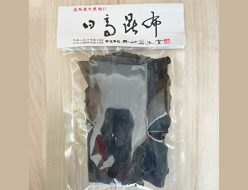
Hidaka dried kelp 30g
Hidaka kelp harvested in the Hidaka region of Hokkaido. It is fluffy and soft, so it is suitable as a side dish of kelp. Please use it after reconstitution with water for about 30 minutes.
-
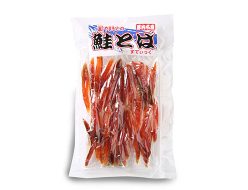
salmon stick
This is a male salmon toba.we select only male salmon from the autumn salmon fixed boat that is full early in the morning, immediately process it, freeze it, and then ship it out in sequence.
-
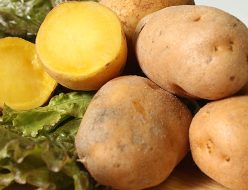
Inca no mezame (potato)
-
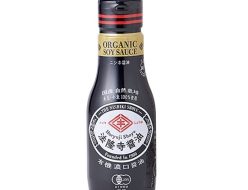
Horyuzi Shoyu(organic)